

Women in comics panel
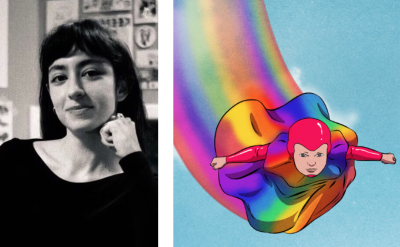
To mark the school's 60th anniversary, GOBELINS Alumni is organizing an exhibition and round table dedicated to women in comics. Today, women illustrators represent only 12% of...

Specializing in landscape and portrait photography, Roman Jehanno was awarded the Hasselblad Master Prize in 2014 for his serie "Savoir-faire", subsequently published in various magazines (National Geographic, Fubiz, Réponse Photo...).
His work alternates between photographic series, documentary films and conceptual frameworks. He has also worked on "SÁMIS", a cinematographic and photographic corpus created within an indigenous community in Northern Europe; "Leftover Lives"a speculative narrative built around anonymous vernacular photographs; and "Alternative Irreality", an experiment exposing the cultural appropriation implemented by generative AI.
In addition to various exhibitions, his work has been published in National Geographic Traveler, The Washington Post and Réponses Photo.
He gives us his feedback and advice on how to get started in photography.
Can you sum up your career since leaving school?
My career didn't get off the ground straight out of school, as it's rare to land a contract straight out of school.
I canvassed agents and presented my portfolio everywhere, but I still had to take on a series of odd jobs as a sales assistant in a Fnac bookshop, and then as a retoucher in e-commerce. I took advantage of this stability to multiply the number of professional meetings on my breaks and free time. I wanted to work in advertising, so I gradually built up a network, thanks to a first acquaintance who'd been to advertising school.
At the same time, I did a lot of personal projects. These series enabled me to continue training, fine-tune my lighting and post-production skills, and above all test things out.
Little by little, I landed more and more interesting contracts. At first, you're forced to take on projects at almost a loss, in order to keep learning, have things to show and build up a network. Over time, I've gradually been able to adjust my rates.
I would like to add, however, that all the hard work in the world may not be enough on its own. You still need a certain amount of luck, especially in this business where competition is fierce and the learning curve so long. Having the good fortune to be surrounded or helped is often, if not always, what turns a situation around: from hardship to success.
To mark the school's 60th anniversary, GOBELINS Alumni is organizing an exhibition and round table dedicated to women in comics. Today, women illustrators represent only 12% of...
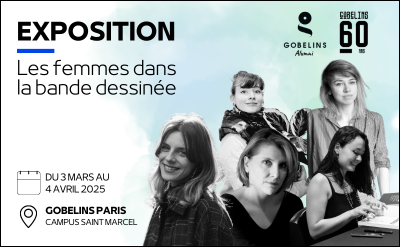
To mark the school's 60th anniversary, GOBELINS Alumni is organizing an exhibition dedicated to women in comics. The event highlights the work of five talented female authors...