
News
How to get into comics after animation
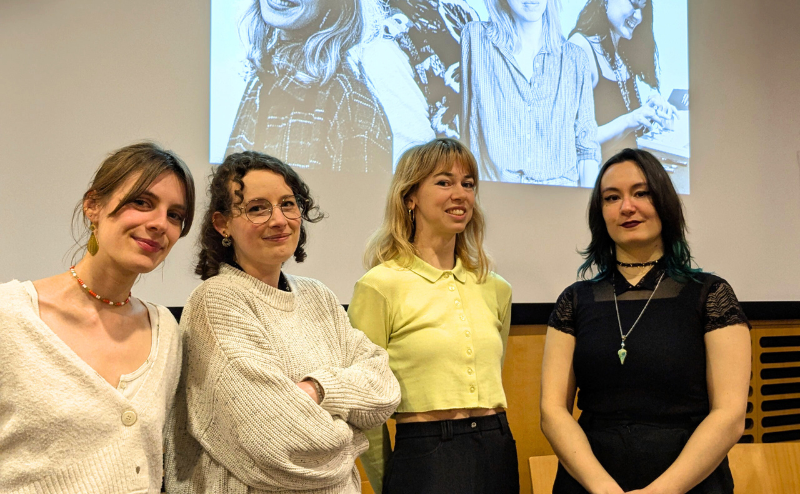
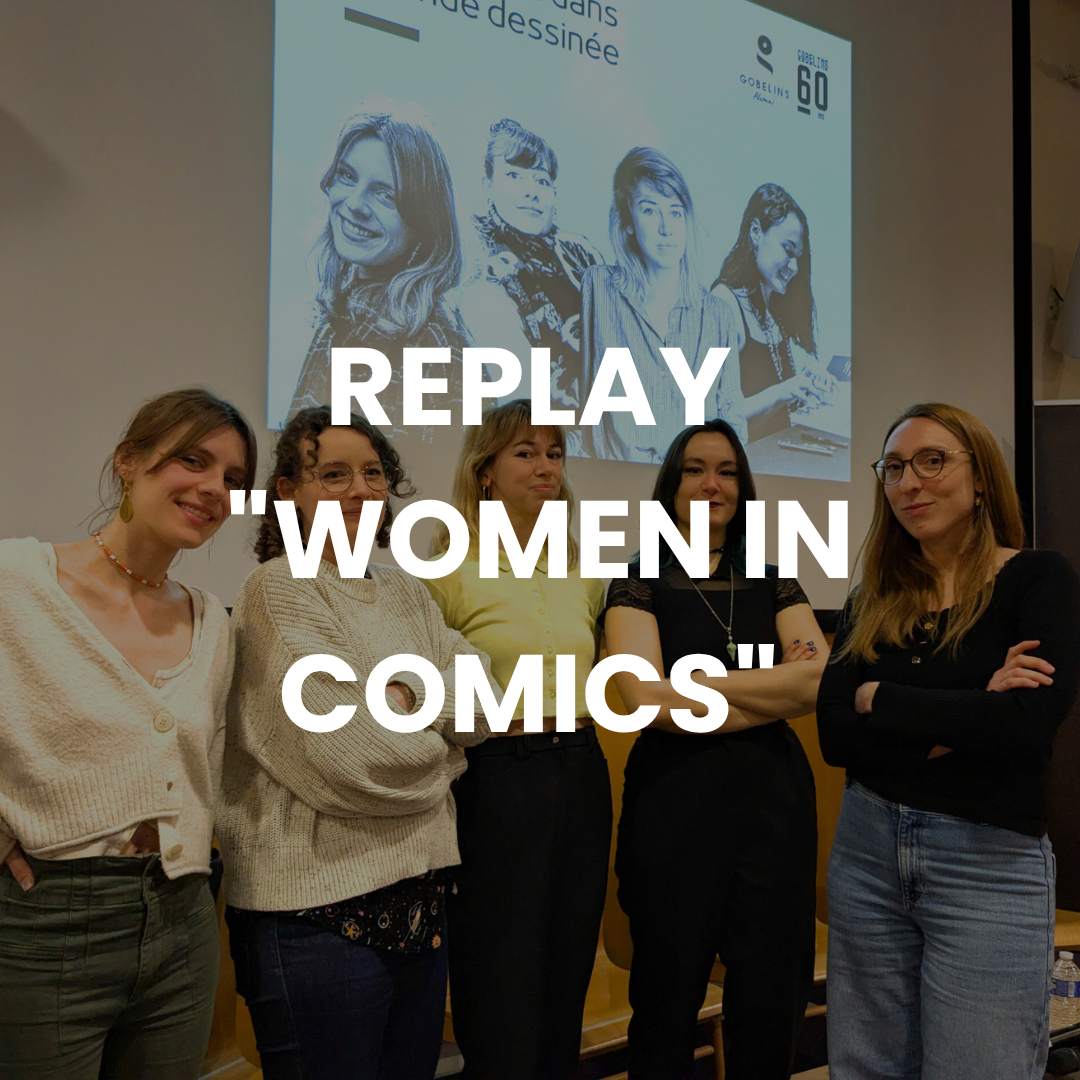
What are the links between animation and comics? How do you find a publisher? Are social networks essential to getting known? Our guests answered all these questions and gave their personal accounts at the "Women in comics" round table organized to mark the 60th anniversary of GOBELINS Paris.
Today, women illustrators represent only 12% of published illustrators. This event is part of GOBELINS Paris' commitment to promoting female talent in the creative and cultural industries, and to combating gender inequality and discrimination.
Our four guests:
Sixtine Dano
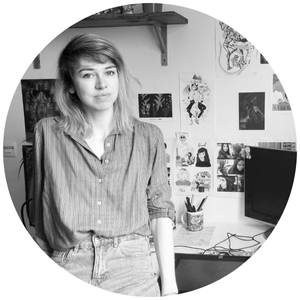
A 2018 graduate of the Concepteur et Réalisateur de Films d'Animation program, Sixtine is an author and cartoonist, as well as a 2D animator and director. In 2025, she signed her first graphic novel, "Sibylline, chroniques d'une escort girl", with Glénat. In it, she shares the intimate and complex story of a student who falls into prostitution.
Claire Fauvel
A graduate of the Concepteur et Réalisateur de Films d'Animation course in 2011, Claire is an author and cartoonist, having published her first comic in 2015 with Casterman, and has since released several comic albums. Her favorite themes are adolescence, art and love, often in a contemporary context.
Audrey Lainé
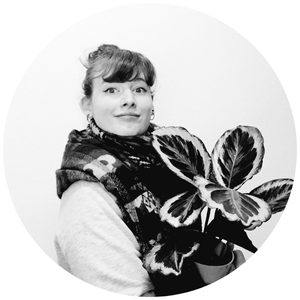
A graduate of the 3D Character Animator course in 2015, Audrey is a 3D animator and comic strip artist. She has penned four albums for Marabulles ("Moi en Double", "Mal briefée", "Les Cœurs insolents" and "Les lois du cœur") and a comic strip for Dargaud ("Petites leçons de permaculture").
Diane Truc
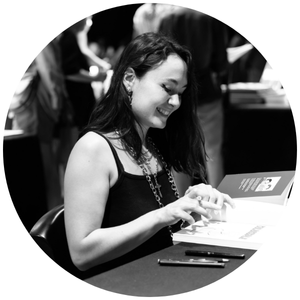
A 2017 graduate of the Concepteur et Réalisateur de Films program, Diane is a 2D animator and webtoon illustrator. After winning a competition with her scriptwriter Rutile, she transformed herself into a virtual mangaka and created the webtoon "Colossale", which was published two years later in 5 paper volumes by Jungle Editions.
Why choose comics after a career in animation?
Sixtine began writing the script for "Sibylline" during her studies. As the story was too long for a short animated film, the comic strip proved to be the ideal format, allowing the story to be told more easily and more freely.
"Comics also came from my desire to stop being a technician and work on my own project".
Sixtine Dano
Diane has wanted to make comics since she was a little girl. For her, comics remain the most effective medium when you want to tell stories on your own. She came to webtoon by winning the "humor" category of the contest organized by the "Webtoon" platform in 2020.
Audrey started out in comics by chance, having been spotted by Navie, her first scriptwriter, thanks to drawings posted on her blog.
Claire began writing her first comic strip during her studies at GOBELINS, but the publishing house that had accepted her project went bankrupt, and the strip was not published. She didn't lose that desire, however, and continued canvassing publishing houses until she was accepted by Casterman, and hasn't stopped writing comics since.
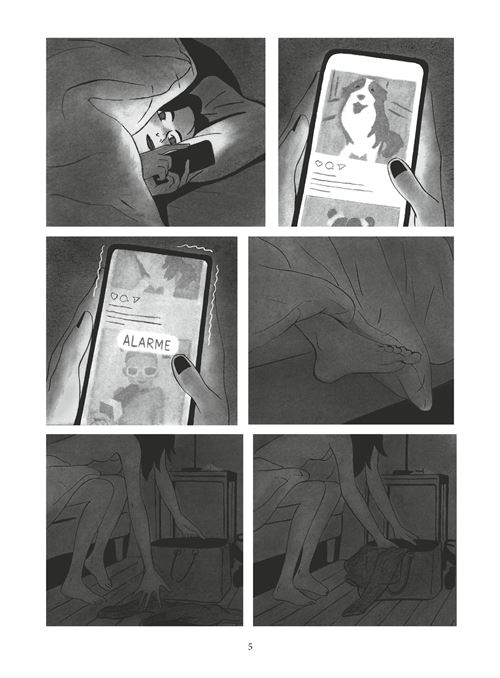
"Sibylline, chronicles of an escort girl" : Sixtine Dano
How can animation influence comics?
For Claire, animation has always nourished her vision of comics. She watches a lot of animated films, and this is reflected in her highly cinematic style. She belongs to a generation of authors who have adopted a dynamic staging style, inspired by manga and animation.
"I always think of my stories as films and then transcribe them into comic strip form".
Claire Fauvel
For Audrey, working with posing in animation feeds her comic strip drawing, and vice versa.
Sixtine had to let go of her animator's reflexes to make full use of the comic strip format in her storytelling. Her work as an animator has also influenced her style of semi-realistic charater design, characteristic of French animation.
"I realized after my first storyboard pass that I was framing my characters in bust. It's an animator's reflex, to be able to lypsinc and posing. I realized that in comics, a very tight framing on the face could say a lot more".
Sixtine Dano
Diane points out that the design of webtoons is often rigid. Authors have to produce one chapter a week, a fast pace that encourages them to focus on speed. To save time on complex poses, many use 3D puppets that they transfer directly, which can result in frozen poses. Conversely, thanks to her experience in animation, Diane's drawing is much more lively.
"An animator's comic shows very quickly, especially in the posings".
Diane Truc
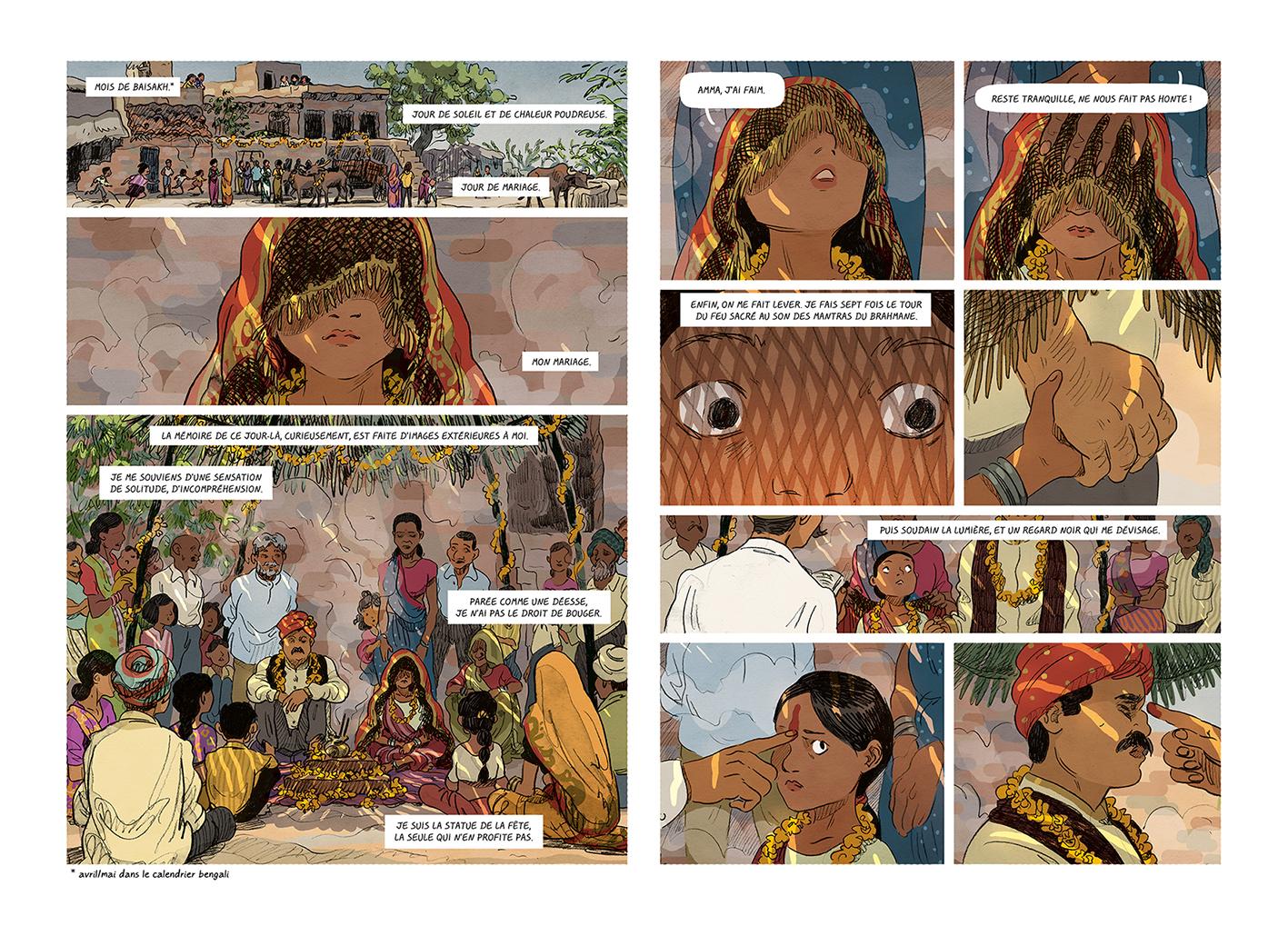
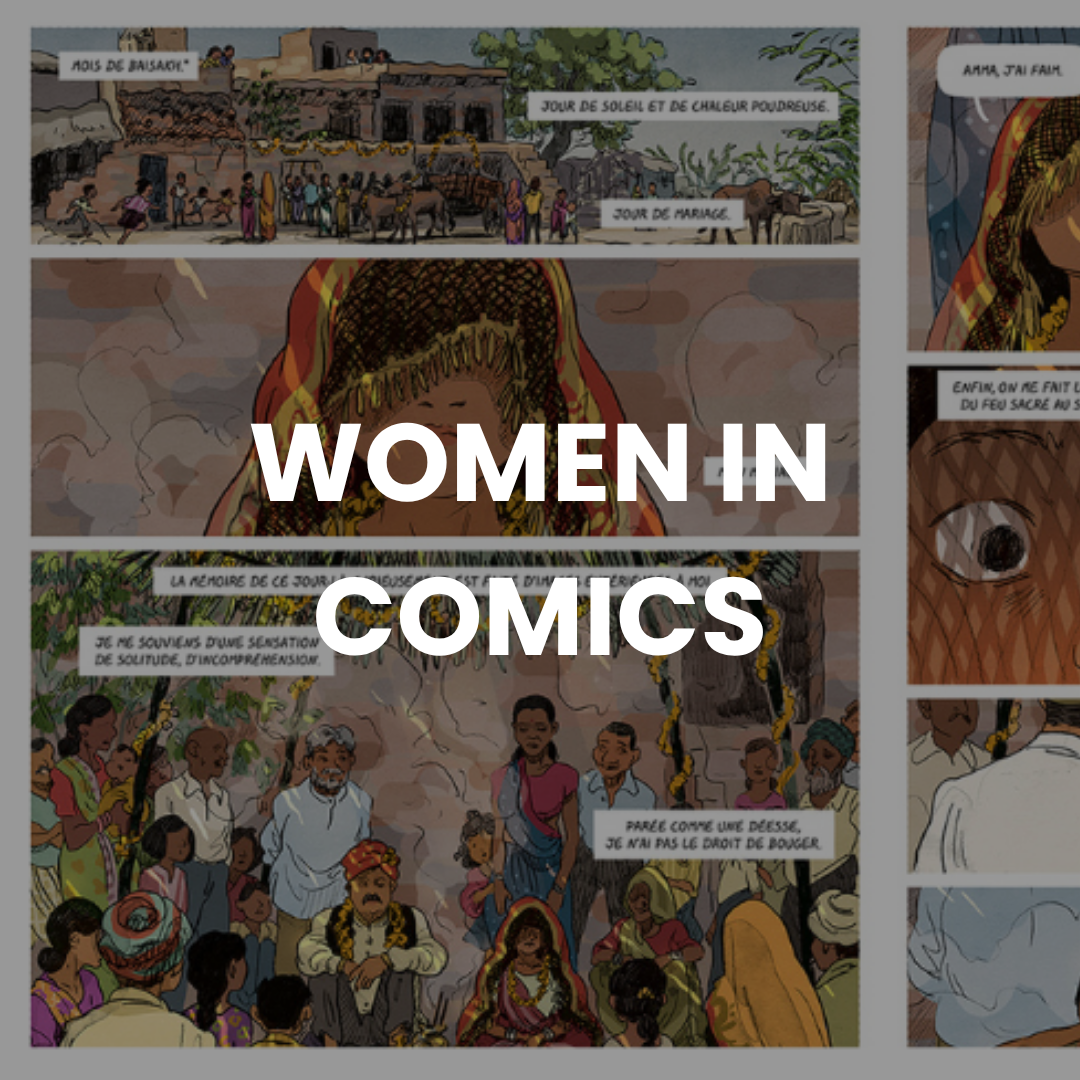
"Phoolan Devi, Queen of the Bandits" - Claire Fauvel
How do I find a publisher?
Audrey entered the world of comics "through the front door" by being approached directly by a publishing house. She landed subsequent contracts thanks to encounters made at comic book festivals, where off times and meals provide an opportunity to exchange ideas with other authors and publishers.
To publish her first comic strip, Claire put together a paper dossier , which she then mailed to all the publishing houses, enabling her to stand out from the other applicants. Today, she gets her contracts through her network and friends. Her advice is to contact the publishing houses that appeal to you.
"Don't hesitate to contact the authors you like, and we'll share our top-secret mailing lists with you!"
Claire Fauvel
The webtoon was a wonderful gateway for Diane. Her editor, based in Korea, gave her total carte blancheover her work. At the end of this experience, Rutile and Diane were contacted by several publishing houses. The webtoon business model has not yet been defined in France, but for Diane it's an excellent opportunity for female authors who want to create stories that are a little different.
"I often talk about the webtoon as a way of breaking the glass ceiling in comics. The webtoon is for women: 70% of them are female, and the audience is mostly young and female. For us, it's a gold mine: we can address people like ourselves and get feedback from the public when we publish.
Diane Truc
Sixtine took her first steps in publishing with "Pourquoi je désobéis pour le climat", a comic strip in 11 strips published on the Instagram account of the engaged media Matin quel journal! affiliated to the Dargaud group. On the strength of this experience, she submitted the script for "Sibylline" to the editor of Matin! as well as to several publishing houses to compete for the best offer.
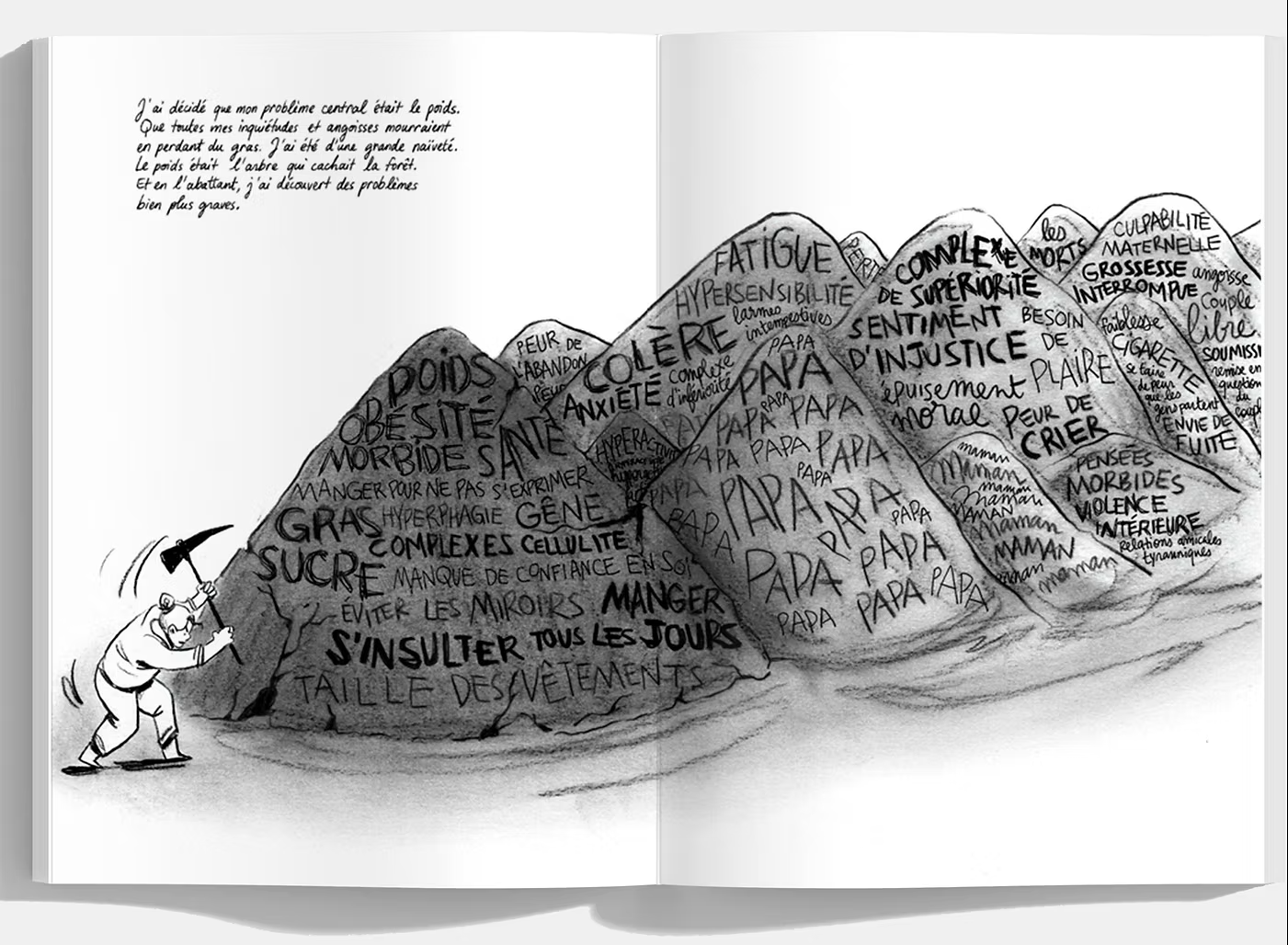
"Ma vie en double" - Navie and Audrey Lainé
Are social networks an effective and sufficient platform for promoting your work?
Sixtine was spotted by Glénat on Instagram. The publishers do a lot of monitoring of animation profiles , and know how to spot the potential in juniors. She therefore recommends showing off your work, even if you don't think you're good enough yet. For Sixtine, the networks are also a very interesting promotional tool , enabling her to tease out the release of her comic and create a community of readers even before it hits bookstores.
Audrey points out that Instagram accounts will be more easily visible to publishers thanks to stories, reposts and subscriptions. She therefore advises associating a site with her bio to be able to show off her portfolio, rather than settling for a single site, which may not be well referenced.
Claire has tried more ethical platforms such as Mastodonte, Pixelfed and Tumblr. For her, it's hard to do without the big platforms, but she has observed that many readers still discover her in bookshops and libraries.
Is it essential to work with an agent?
For Diane, agents specializing in comics are rare. She found hers at the end of her webtoon experience. Her remuneration represents between 10 and 15% of her advance on royalties, but she benefits from real support, particularly for everything to do with contracts, which frees her from the stress of negotiations.
Sixtine didn't have an agent for her first contract, but she was able to rely on other authors to assess the amount of the advance and the proposed percentages. She points out that all elements of the contract are negotiable: advance, audiovisual rights, merchandising, etc. Hence the advantage of having an agent, who is more at ease defending these points, especially when you're just starting out. Finally, agents represent several authors at the same time, which enables them to put pressure on publishing houses.
Claire doesn't work with an agent, but she recommends taking one on when you don't master all the subtleties of a contract.
"Some publishers have tried to rip me off by accepting proposals by e-mail and slipping hidden paragraphs at the end of the contract that say the opposite".
Claire Fauvel
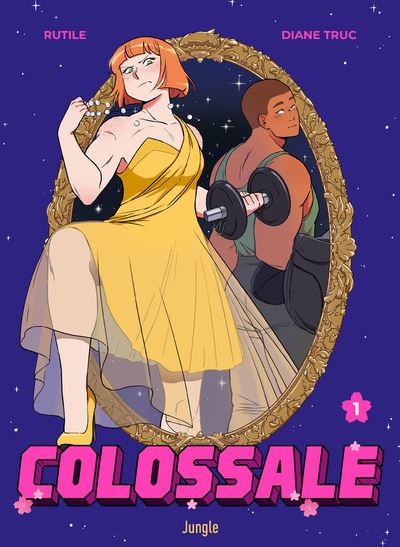
"Colossale" - Rutile and Diane Truc
What are the main mistakes to avoid?
For Diane, the first mistake is not to negotiate when you're just starting out. She recommends having someone read the contract with you, to make sure you understand all the terms. She also advises starting with fanzianat, which is the best way to experience comic book design from A to Z, and to realize how much time is spent on a page, inking, storyboarding...
Audrey recommends not accepting projects on subjects that don't interest you , at the risk of not being able to work. She hasn't hesitated to turn down projects where the script didn't appeal to her.
For Claire, accepting a subject you don't like is the number one mistake, especially when you have a world of your own and a desire to write. A comic strip can represent several years' work, which can quickly become hellish if you don't like what you're doing.
She also recommends that you follow the steps involved in creating a comic strip when you're starting out: start by writing the entire script, then move on to storyboarding to test the rhythm. As in animation, this stage is essential before tackling the final boards. She also advises having each stage reread by friends and family to check the rhythm, the coherence of the dialogues...
TO FIND OUT MORE
 1
1





No comment
Log in to post comment. Log in.